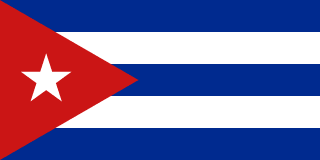
Cuba's migration history is inseparable from its political history. Since the 1959 revolution that brought Fidel Castro to power, successive waves of Cuban emigration have been driven by political opposition, economic hardship, and family reunification, creating a diaspora — centred in the United States, particularly South Florida — that has profoundly shaped both Cuban-American politics and US-Cuba relations. The unique features of Cuba's political system, combined with the US Wet Foot/Dry Foot policy that for decades provided legal pathways for Cubans reaching US soil, produced migration patterns fundamentally different from those in the rest of the Caribbean.
The Cuban diaspora in the United States numbers over 2 million people, with the Miami metropolitan area serving as the cultural, economic, and political capital of Cuban America. Cuban-Americans have achieved extraordinary political influence relative to their numbers, driving US Cuba policy for decades and maintaining bipartisan pressure for sanctions and isolation. The economic remittances they send to Cuba — estimated at $3-4 billion annually — are the country's second largest source of foreign exchange, supplementing a state economy that has struggled to meet basic consumption needs for decades.
The Díaz-Canel government's handling of the July 2021 protests — in which thousands of Cubans took to the streets to demand political freedoms and an end to economic shortages — and the subsequent economic deterioration triggered a new and massive emigration wave. In fiscal year 2022, US Customs and Border Protection recorded over 200,000 encounters with Cuban nationals at the US-Mexico border — a record that shattered previous highs. Cubans were increasingly flying to Nicaragua (which eliminated visa requirements for Cuban nationals) and then travelling overland through Central America and Mexico to reach the US border.
Within Cuba, internal migration from eastern provinces to Havana has been a persistent phenomenon driven by concentration of economic activity, services, and infrastructure in the capital. The Cuban government historically maintained restrictions on migration to Havana through the sistema de empadronamiento (registration system), but enforcement has weakened and informal settlements on Havana's periphery have grown significantly.
Population: approximately 11.1 million
Capital: Havana
US diaspora: 2+ million Cuban-Americans
Remittances: USD 3–4 billion annually (estimated)
Literacy rate: 99.7% (one of the highest in Latin America)