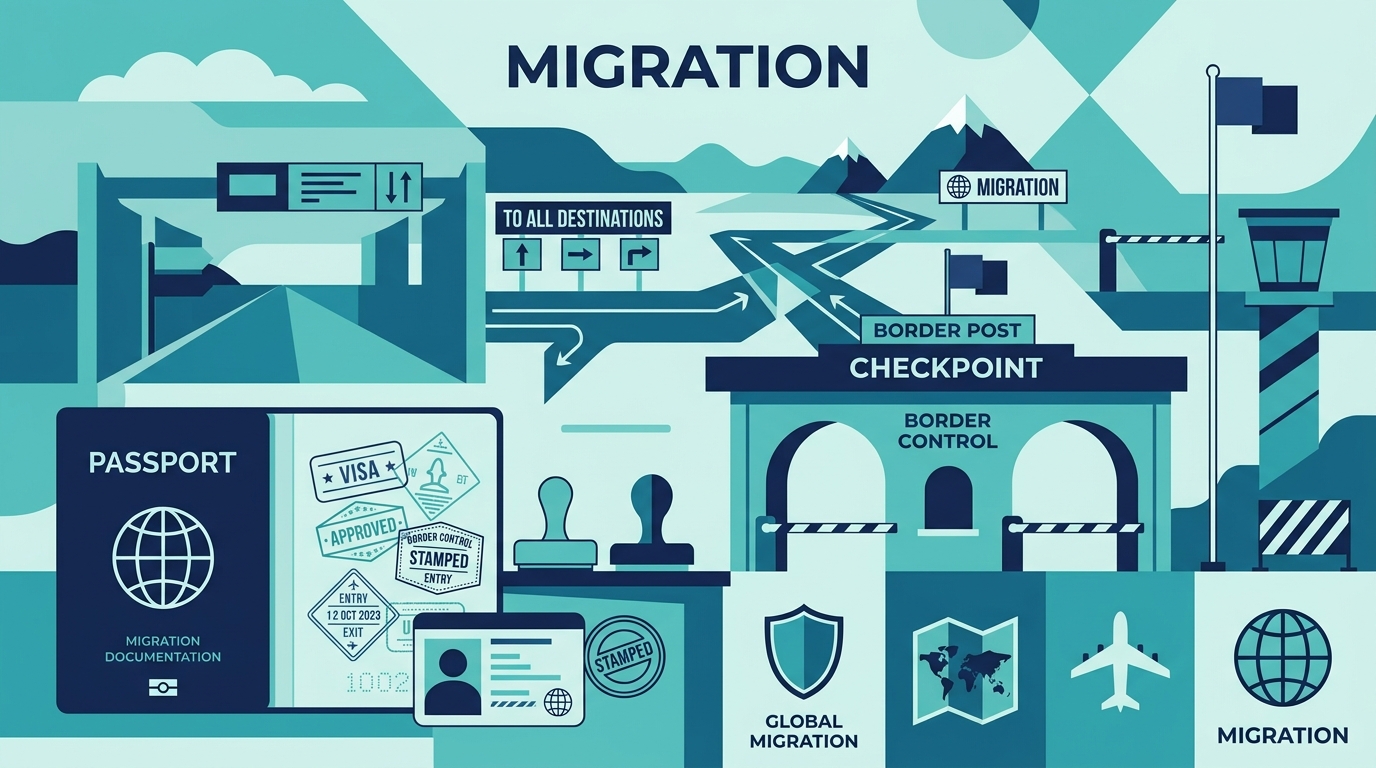
Effective border management in the Caribbean presents unique challenges that differ fundamentally from continental border contexts. The region comprises dozens of island territories, many with extensive maritime boundaries, small coastlines relative to population, and deep historical traditions of inter-island movement. Balancing security imperatives with the facilitation of legitimate travel, trade, and the free movement commitments of CARICOM requires sophisticated and well-resourced border management systems that many small island states struggle to maintain.
The Caribbean basin is a major transit zone for irregular migration flows, particularly from Haiti, Venezuela, and increasingly from African and Asian countries whose citizens use the region as a stepping stone toward North America and Europe. These flows intersect with drug and arms trafficking routes operated by criminal organizations, creating complex border security challenges that require both national capacity and regional cooperation to address effectively.
Unlike land borders, Caribbean maritime borders are inherently difficult to monitor and control. Thousands of kilometres of coastline, hundreds of small and uninhabited cays, and the need to intercept small, fast vessels in open water require coast guard assets and surveillance technologies that strain the budgets of small island states. Regional cooperation mechanisms — including information sharing, joint patrols, and coordinated response protocols — are essential to filling gaps that individual states cannot address alone.
The situation is further complicated by overlapping legal frameworks. Territorial waters extend 12 nautical miles, exclusive economic zones extend 200 nautical miles, and agreements on search-and-rescue responsibilities may cover different areas than immigration enforcement authority. When vessels in distress are intercepted far from shore, questions about rescue obligations, immigration processing, and the rights of those rescued create legal and operational complexity.
Modern border management increasingly relies on technology: biometric systems, advance passenger information (API) systems that allow screening before arrival, integrated database sharing between regional authorities, and surveillance systems that extend the reach of limited human resources. Building and maintaining this technological infrastructure — and training personnel to use it effectively and ethically — is a priority for the CMC Border Management Network.
Capacity building programs supported by IOM, INTERPOL, and bilateral partners have helped Caribbean states develop risk profiling systems, document fraud detection capabilities, and interview techniques that distinguish migrants from trafficking victims, asylum seekers, and regular travellers. Ensuring that these capabilities respect human rights and do not result in unlawful detention or return of protection-seeking individuals is a central concern of the network.
Border management is not only about security — it also plays a crucial role in facilitating the trade, tourism, and investment flows on which Caribbean economies depend. Inefficient or overly restrictive border procedures impose costs on businesses, deter tourists, and create bureaucratic barriers to the free movement that CARICOM commitments envision. The challenge is developing border systems sophisticated enough to identify and intercept genuine security threats while remaining welcoming and efficient for the vast majority of legitimate travellers.
The CMC Border Management Thematic Network connects border officials, policymakers, and international experts to share lessons learned, identify common standards, and develop the regional frameworks needed to manage Caribbean borders effectively in an increasingly mobile world.