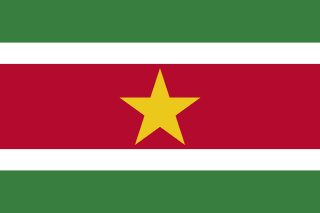
Suriname is a linguistically and culturally diverse nation on the northeastern coast of South America, but it is closely integrated into the Caribbean migration system through its colonial history, its membership in the Caribbean Community (CARICOM), and the extensive ties maintained by its significant diaspora community in the Netherlands. The country's extraordinary ethnic diversity — including Creoles, Maroons, Hindustanis, Javanese, Indigenous peoples, and others — reflects its history as a colony that drew labour from multiple continents and created one of the most complex multiethnic societies in the hemisphere.
The Netherlands-Suriname migration relationship is one of the Caribbean region's most significant and complex bilateral migration corridors. Following independence in 1975, and especially following the military coup of 1980, large numbers of Surinamese emigrated to the Netherlands, where colonial history had established linguistic and cultural connections. Today, the Surinamese diaspora in the Netherlands numbers over 350,000 — more than half of Suriname's total population — making it one of the highest diaspora-to-resident-population ratios in the world.
Suriname's vast interior — covering more than 80% of the country's territory with dense rainforest — is home to Maroon communities descended from enslaved Africans who escaped Dutch plantations and established independent communities in the interior. These communities maintain distinct cultures, languages, and governance systems, and face particular migration dynamics as younger generations move to coastal cities or emigrate to the Netherlands in search of education and economic opportunity. Internal migration from interior communities to the capital Paramaribo has accelerated as traditional subsistence livelihoods become less viable.
Suriname's interior has experienced significant migration related to small-scale and artisanal gold mining, which employs thousands of migrants — predominantly from Brazil and Guyana — who work in often informal and dangerous conditions. This mining migration raises serious concerns about environmental degradation, mercury pollution of waterways, labour exploitation, and human trafficking. Managing the social and environmental impacts of this internal and cross-border migration is a significant governance challenge for Suriname.
Population: approximately 600,000
Capital: Paramaribo
Netherlands diaspora: 350,000+ people
Official languages: Dutch (with Sranan Tongo and others widely spoken)
CARICOM membership: Full member since 1995