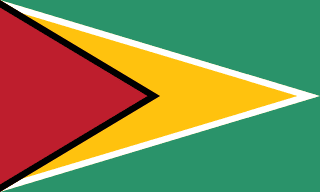
Guyana occupies a unique position in the Caribbean migration landscape: it is the only English-speaking country on the South American mainland, shares cultural and historical bonds with the Anglophone Caribbean, and is experiencing a historic economic transformation driven by the discovery and rapid development of massive offshore oil reserves. This oil boom — which began with first commercial production in 2019 — is fundamentally reshaping Guyana's migration dynamics, transforming a historically high-emigration country into an emerging migration destination and creating new pressures on infrastructure, services, and social cohesion.
Before the oil era, Guyana was characterized by some of the highest emigration rates in the Caribbean. More than 55% of Guyanese-born citizens reside abroad, predominantly in the United States, Canada, the United Kingdom, and the Caribbean. More than 80% of Guyanese nationals with tertiary education have emigrated, creating a severe brain drain that has weakened public institutions and professional sectors. Remittances are a vital source of income for most Guyanese families and represent one of the largest recipients of remittances relative to GDP in Latin America and the Caribbean.
Guyana's oil production has grown from zero in 2018 to over 600,000 barrels per day by 2024, with ambitious projections for continued expansion. This rapid growth has created an extraordinary demand for skilled labour — engineers, managers, technical specialists — that Guyana's small domestic labour market cannot supply. The resulting competition for skilled workers is driving wage increases across the economy, creating both incentives for diaspora return and pressures on non-oil sectors that struggle to retain employees.
The government has actively sought to attract diaspora members and foreign investors, positioning oil revenues as the foundation for diversified development. The Guyana Office for Investment (Go-Invest) and diaspora engagement initiatives aim to channel both human and financial capital into the country's development. However, concerns about the "resource curse" — the tendency of oil wealth to generate inequality, corruption, and Dutch disease effects — have tempered optimism about Guyana's oil-driven transformation.
Guyana's population is divided primarily between Afro-Guyanese (descendants of enslaved Africans) and Indo-Guyanese (descendants of indentured labourers from India), who together comprise about three-quarters of the population. These groups have historically backed ethnically distinct political parties and voted along ethnic lines, creating persistent political tensions. Venezuela's territorial claim to the Essequibo region — comprising 70% of Guyana's territory — adds an external security dimension that shapes Guyana's migration and security policy.
Population: approximately 800,000
Capital: Georgetown
Emigration rate: 55%+ of citizens live abroad
Brain drain: 80%+ of university graduates have emigrated
Oil production: 600,000+ barrels/day (2024)
Remittances: among highest in LAC as % of GDP