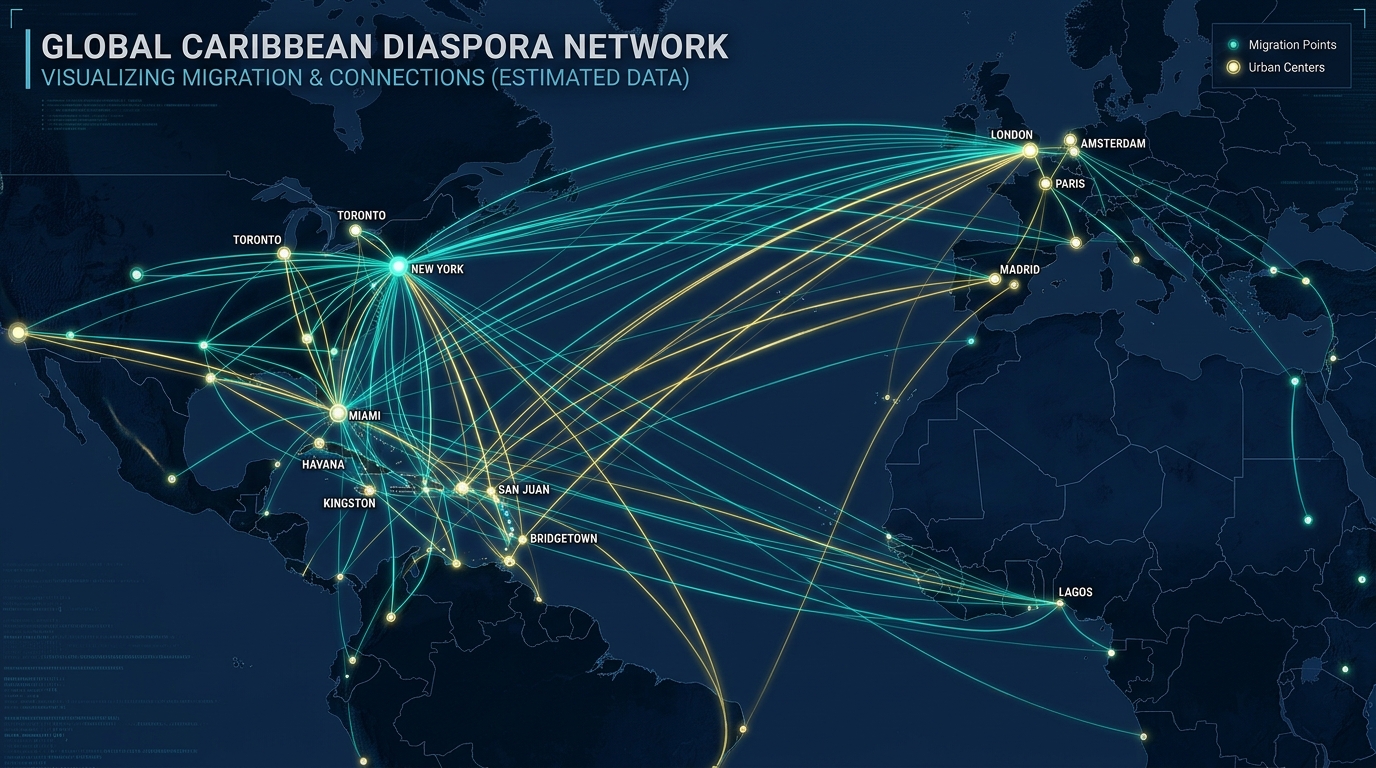
The Caribbean diaspora is one of the most significant and consequential in the world relative to regional population size. Across every island and territory, millions of Caribbean-born people and their descendants live in the United States, Canada, the United Kingdom, France, the Netherlands, and increasingly in other regions of Latin America and Europe. Far from being lost to their origin communities, diaspora members maintain deep connections through remittances, visits, investment, and political engagement that make them a powerful force for Caribbean development.
Remittances — money sent home by diaspora members — represent a lifeline for Caribbean economies. In Haiti, remittances account for more than 30% of GDP, dwarfing foreign direct investment and development aid. Jamaica, Belize, and the Dominican Republic also receive remittances equivalent to significant percentages of their national incomes. During the COVID-19 pandemic, when many expected remittance flows to collapse as diaspora workers lost jobs, Caribbean communities showed extraordinary resilience, with many diaspora members cutting personal expenses to continue supporting families at home.
The contribution of Caribbean diaspora communities extends far beyond financial transfers. Diaspora entrepreneurs invest in businesses, real estate, and agricultural enterprises in their home countries. Diaspora professionals return home or provide remote expertise that strengthens healthcare, education, and technical sectors. Cultural industries — music, food, fashion, literature — carry Caribbean identity and soft power across the globe, creating economic opportunities and building international goodwill.
Several Caribbean governments have developed formal diaspora engagement strategies that treat their overseas communities as genuine development partners rather than merely sources of remittances. These strategies include diaspora bonds that allow overseas nationals to invest in national development, diaspora volunteer programs that bring skilled professionals home for short-term assignments, and dual citizenship policies that maintain legal bonds between diaspora members and their origin countries.
A key challenge for Caribbean diaspora engagement is maintaining meaningful connections with second- and third-generation community members who were born abroad but retain cultural, familial, and emotional ties to the Caribbean. These individuals often have professional skills, financial resources, and influence in their countries of residence that could be powerful assets for Caribbean development — if effective engagement strategies are developed.
The CMC Diaspora Network facilitates dialogue between Caribbean governments, diaspora organizations, and development agencies to identify best practices in diaspora engagement, address barriers to diaspora investment and return, and ensure that the voices and interests of diaspora communities are reflected in regional migration governance.
The Caribbean diaspora is not simply an economic phenomenon — it is a cultural and social one with profound implications for Caribbean identity. Communities in Brooklyn, London, Toronto, and Amsterdam have created vibrant Caribbean cultures that blend origin traditions with new influences, producing art, music, cuisine, and intellectual traditions that feed back into and enrich Caribbean cultures. Understanding diaspora communities as integral parts of the Caribbean — rather than those who left — is essential to a comprehensive vision of regional development.