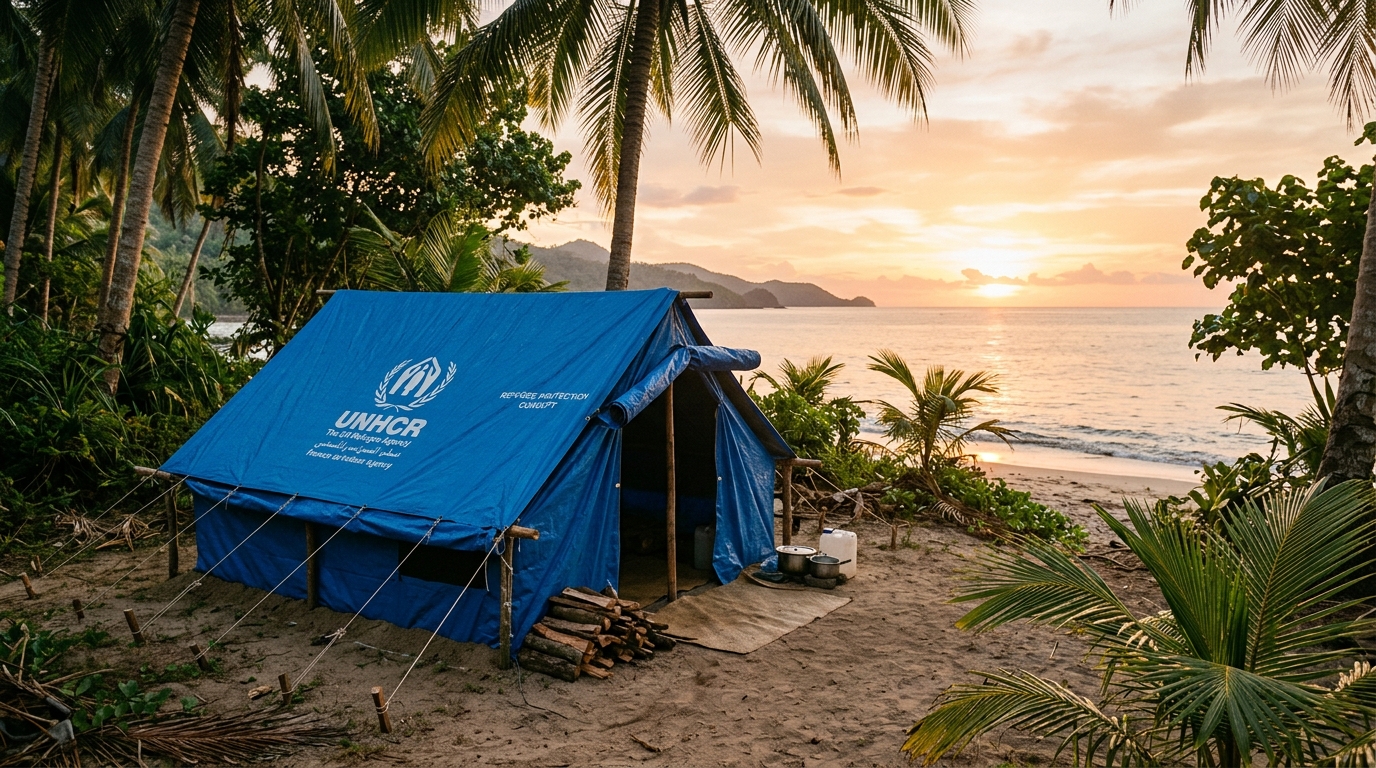
While the Caribbean is not typically seen as a major refugee-hosting region, the dramatic increase in forced displacement across Latin America — particularly from Venezuela, Cuba, and Haiti — has placed significant pressure on Caribbean asylum systems that were often designed for small and infrequent caseloads. The need to develop fair, efficient, and rights-compliant refugee determination systems has become one of the most pressing migration governance challenges facing the region.
Venezuela's political and economic collapse has produced one of the largest displacement crises in the Western Hemisphere, with over seven million Venezuelans having fled the country since 2015. Many have moved to other South American countries, but significant numbers have sought refuge in Caribbean territories — particularly Trinidad and Tobago and Aruba — which are geographically close to Venezuela. Trinidad and Tobago alone hosts an estimated 35,000 to 50,000 Venezuelans, in a country of just 1.4 million people, creating significant social, economic, and political pressures.
Most Caribbean states have signed the 1951 Refugee Convention and its 1967 Protocol, but many lack the domestic legislation, administrative capacity, and dedicated financial resources needed to implement their protection obligations effectively. Refugee status determination (RSD) processes — the formal procedures by which asylum seekers have their claims assessed — are often slow, under-resourced, and inaccessible to people who may have fled without documents or legal representation.
The UNHCR plays a critical role in supporting Caribbean states to develop and strengthen their asylum systems, including through training of adjudicators, provision of legal information to asylum seekers, and, in some countries, direct involvement in RSD procedures. The CMC Refugee Protection Network works alongside UNHCR to identify gaps in national protection systems and develop practical recommendations for strengthening them.
Statelessness — the condition of lacking any nationality — affects significant numbers of people in the Caribbean, particularly children born to irregular migrants, descendants of historical migrant worker populations, and individuals whose birth was never officially registered. Haiti and the Dominican Republic have a complex history relating to statelessness, following the Dominican Republic's controversial 2013 Constitutional Court ruling that retroactively stripped citizenship from Dominican-born descendants of irregular migrants, rendering tens of thousands stateless.
Stateless individuals face extreme vulnerability: they cannot access public services, cannot travel legally, cannot work formally, and have no government to turn to for protection. Addressing statelessness requires both legislative changes to nationality laws and practical civil registration programs that ensure all births, marriages, and deaths are formally recorded.
Not everyone fleeing dangerous situations meets the strict legal definition of a refugee under the 1951 Convention. People fleeing gang violence, domestic abuse, or general insecurity may have equally compelling protection needs without qualifying for formal refugee status. Caribbean states are exploring complementary protection frameworks — legal statuses short of full refugee recognition — that provide temporary protection and basic rights to those who cannot safely return home even if they do not meet refugee criteria.
The CMC Refugee Protection Network advocates for robust, rights-based approaches to protection that reflect the full range of forced displacement experiences in the Caribbean context, ensuring that no person in need of protection is turned away without fair consideration of their individual circumstances.