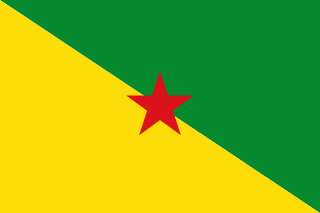
French Guiana is an overseas department and region of France on the northeastern coast of South America, making it the largest territory in the European Union by area (91,000 km²) despite its Caribbean regional affiliation. Its residents are French and EU citizens with full freedom of movement rights. French Guiana's defining features include the Guiana Space Centre at Kourou — home to the European Space Agency's primary launch facility — vast Amazonian rainforest covering 90% of its territory, and a highly diverse population shaped by successive waves of migration from multiple continents.
Migration is central to French Guiana's demographic story. The territory's population has grown rapidly — from around 70,000 in the 1980s to approximately 300,000 today — driven primarily by immigration from Suriname, Haiti, Brazil, and other Caribbean and South American countries. This immigration has been driven by French Guiana's relative prosperity (sustained by French state transfers and Space Centre employment) compared to its neighbours, as well as by its position as the only EU territory on the South American continent.
The largest immigrant communities in French Guiana are from Suriname (particularly Maroon communities with historic cross-border ties along the Maroni River) and Brazil (primarily from the northern state of Amapá). These communities have created a remarkably diverse social fabric, with dozens of languages spoken and a cultural mix that blends Amazonian Indigenous, Afro-Caribbean, Brazilian, Surinamese, Haitian, and French metropolitan influences.
Population: approximately 300,000
Capital: Cayenne
Status: French overseas department and region
Area: 91,000 km² (largest EU territory)
Space Centre: European Space Agency launch site at Kourou
French Guiana has one of the EU's most distinctive border situations: its extensive borders with Suriname (along the Maroni River) and Brazil (through remote Amazonian forest) are among the most difficult to control in the European Union. The Maroni River border has historically been porous, with Maroon communities living on both sides maintaining traditional cross-river relationships that predate any modern border. Managing migration while respecting these traditional cross-border ties requires culturally sensitive approaches.
Gold mining in the interior draws thousands of irregular migrants — predominantly Brazilian garimpeiros (informal miners) — who work in remote areas largely outside effective state control. The health, environmental, and human rights dimensions of this mining migration are significant: mercury contamination of river systems, violence between rival mining groups, and exploitation of workers in remote areas are documented challenges.
French Guiana's rapidly growing population creates demand for public services — schools, hospitals, social housing — that has strained the territory's capacity and generated political tensions between newer immigrant communities and longer-established Creole and indigenous populations. These tensions periodically manifest in social unrest, as occurred in 2017 when widespread strikes demanded increased investment in public services and security.